


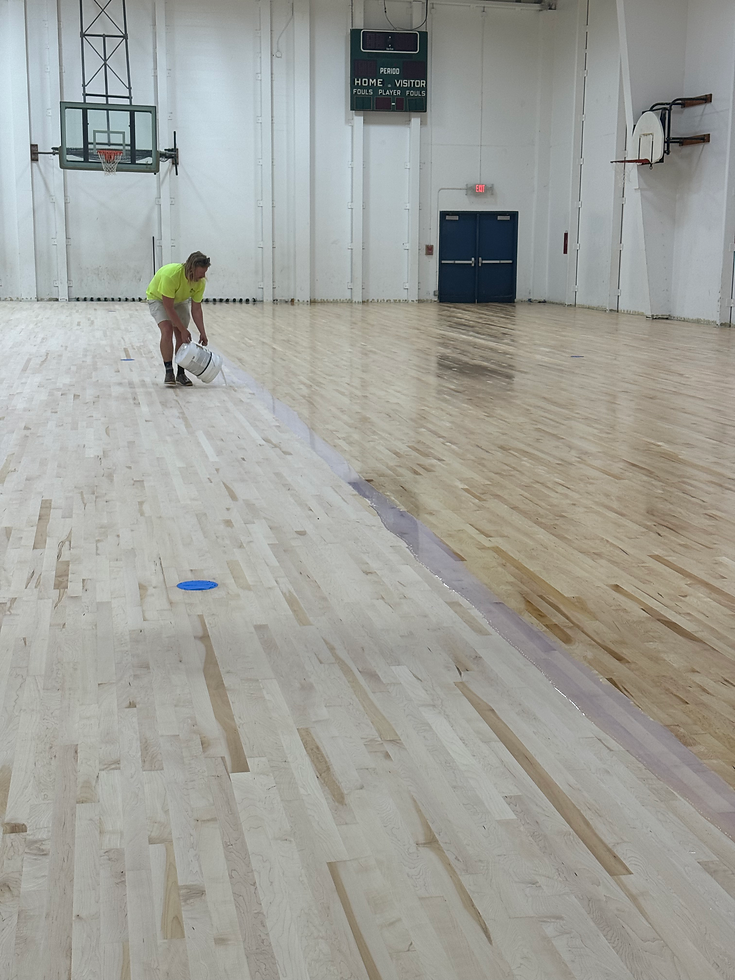
Detailing Hardwood Flooring Finishes
- Ben Hadlock
- Jul 25, 2025
- 5 min read

Here's a detailed description of common hardwood flooring finishes, outlining their strengths and weaknesses:
1. Aluminum Oxide
* Description: This is a factory-applied, highly durable finish infused into the top layer of prefinished hardwood planks. It's a naturally occurring mineral that forms an extremely hard protective layer.
* Strengths:
* Exceptional Durability: Widely considered the most durable finish, offering superior resistance to scratches, scuffs, fading, and water damage.
* Long Lifespan: Can last 25 years or more under normal conditions.
* Low Maintenance: Requires minimal cleaning and care.
* Factory Applied: Ensures consistent, high-quality application.
* Weaknesses:
* Difficult to Refinish: Nearly impossible to sand and refinish on-site if damaged or if you want a new look. Individual boards often need to be replaced.
* Limited Customization: Since it's prefinished, you're limited to the styles and colors offered by manufacturers.
* Cost: Prefinished flooring with aluminum oxide can sometimes be more expensive upfront.
2. Acid-Cured Finishes (Swedish Finish / Conversion Varnish)
* Description: These are solvent-based finishes that cure through a chemical reaction initiated by an acid catalyst. They form an extremely hard, resilient surface.
* Strengths:
* Outstanding Durability: Offers excellent resistance to scratches, abrasion, and chemicals, making it suitable for high-traffic residential and commercial spaces.
* Long-Lasting: Can provide 10-15 years of protection.
* High Build: Creates a thick, protective layer over the wood.
* Weaknesses:
* Strong Fumes & High VOCs: Releases very strong, potentially harmful fumes during application, requiring excellent ventilation and often professional application.
* Long Curing Time: Takes several days to fully cure and off-gas.
* Brittle: Can be prone to chipping if a heavy object is dropped on it.
* Difficult to Apply: Requires skill and experience to apply correctly.
3. Moisture-Cured Urethane
* Description: Another solvent-based finish that cures through a reaction with moisture in the air. It creates an incredibly tough and durable surface.
* Strengths:
* Exceptional Hardness: Provides superior resistance to wear, stains, scratches, and moisture.
* High Gloss: Dries to a very high sheen, offering a rich, deep look.
* Suitable for High-Traffic: Excellent for commercial settings and very busy residential areas.
* Weaknesses:
* Very Strong Fumes & High VOCs: Similar to acid-cured finishes, it produces potent odors during application, necessitating significant ventilation.
* Moisture Sensitive during Application: High humidity can sometimes lead to bubbling or other application issues.
* Ambering: Tends to amber (yellow) over time, which may not be desirable for all wood species or aesthetic preferences.
4. Two-Component Water-Based Polyurethane
* Description: This is a modern, environmentally friendly finish that uses water as a carrier. It consists of two parts that are mixed just before application: the polyurethane base and a hardener (catalyst) that significantly boosts its durability.
* Strengths:
* Excellent Durability: Offers durability comparable to oil-based polyurethanes, with good resistance to scratches, scuffs, and stains.
* Low VOCs & Odor: Much safer and more pleasant to work with than solvent-based options, making it ideal for occupied homes.
* Fast Drying Time: Allows for multiple coats in a single day, speeding up the finishing process.
* Non-Yellowing: Dries clear and stays clear, preserving the natural color of the wood.
* Good for Light Woods: Ideal for maple, ash, or other light-colored wood species where ambering is undesirable.
* Weaknesses:
* Higher Cost: Generally more expensive than one-component water-based or oil-based polyurethanes.
* Slightly Less forgiving to Apply: Requires careful application to avoid lap marks or streaking, though modern formulations are much improved.
5. Oil-Based Polyurethane
* Description: A traditional, solvent-based finish that creates a durable, plastic-like film on the surface of the wood. It's a popular choice for its classic look.
* Strengths:
* Good Durability: Provides solid protection against wear, moisture, and scratches for typical residential use (lasting 5-10 years).
* Warm, Amber Tone: Develops a rich, amber hue over time, which many find desirable, especially for traditional aesthetics or darker woods.
* Cost-Effective: Often more affordable than water-based or specialized finishes.
* Relatively Easy to Apply: A common choice for DIYers.
* Weaknesses:
* Strong Fumes & High VOCs: Produces strong odors that can linger for days or weeks, requiring good ventilation.
* Long Drying Time: Requires more time between coats and for full curing, extending the project timeline.
* Yellowing: The ambering effect continues to deepen over time, which may not be suitable for light-colored woods or modern aesthetics.
6. One-Component Water-Based Polyurethane
* Description: Similar to the two-component version, but without the added hardener. It cures as the water evaporates.
* Strengths:
* Low VOCs & Odor: Environmentally friendly and pleasant to work with.
* Fast Drying Time: Allows for quick recoats.
* Non-Yellowing: Dries clear and maintains the natural wood color.
* Easy to Clean Up: Cleans up with water.
* Weaknesses:
* Moderate Durability: Less durable than two-component water-based or solvent-based polyurethanes, making it less ideal for very high-traffic areas or homes with active pets/children.
* Requires More Coats: Often needs more coats to achieve sufficient protection compared to more durable options.
7. Hardwax Oils / Penetrating Oils
* Description: These finishes penetrate the wood fibers rather than forming a film on the surface. They are typically made from natural oils (like tung oil, linseed oil) and waxes.
* Strengths:
* Natural Look and Feel: Enhances the wood's natural grain and texture, offering a matte or low-sheen finish that feels like real wood.
* Easy to Repair: Scratches or damaged areas can often be spot-repaired without needing to refinish the entire floor.
* Breathable: Allows the wood to "breathe," which can be beneficial in certain environments.
* Eco-Friendly Options: Many are made from natural, renewable resources with low VOCs.
* Weaknesses:
* Lower Durability (Surface Protection): While they protect the wood, they don't form a hard, impermeable layer like polyurethanes, making them more susceptible to surface wear and water spotting.
* Higher Maintenance: Requires more frequent reapplication (often every 3-5 years) and specific cleaning products.
* Not as Scratch-Resistant: While easy to repair, they scratch more easily than film-forming finishes.
* Can Darken Wood: Penetrating oils can sometimes deepen or slightly darken the wood's color.
8. Wax
* Description: One of the oldest methods of protecting wood floors. It involves applying a layer of natural or synthetic wax (solid or liquid) to the wood surface.
* Strengths:
* Natural Aesthetic: Provides a very natural, low-luster, soft sheen that highlights the wood's character.
* Easy to Apply: Relatively simple to apply and reapply.
* Easy Spot Repair: Small damaged areas can often be buffed out or re-waxed.
* Non-Toxic: Many wax finishes are very low in VOCs.
* Weaknesses:
* Low Durability: Offers the least protection against wear, scratches, and spills compared to other finishes.
* High Maintenance: Requires frequent buffing and re-waxing (often annually or more often in high-traffic areas).
* Water Sensitive: Highly susceptible to water stains and spills.
* Cannot Be Coated with Urethane: Once a floor has been waxed, it's very difficult to apply polyurethane or other film-forming finishes over it due to adhesion issues. The wax must be completely removed first.
* Dirt Attraction: Can attract and hold dirt more easily than harder finishes.


Comments